
Cheesecake Factory, Dave & Buster's, and Roller Rinks . . . Why Aren't They Here?
Exploring How The Businesses Everyone Seems to Want but Never Seem to Arrive Make Their Decisions
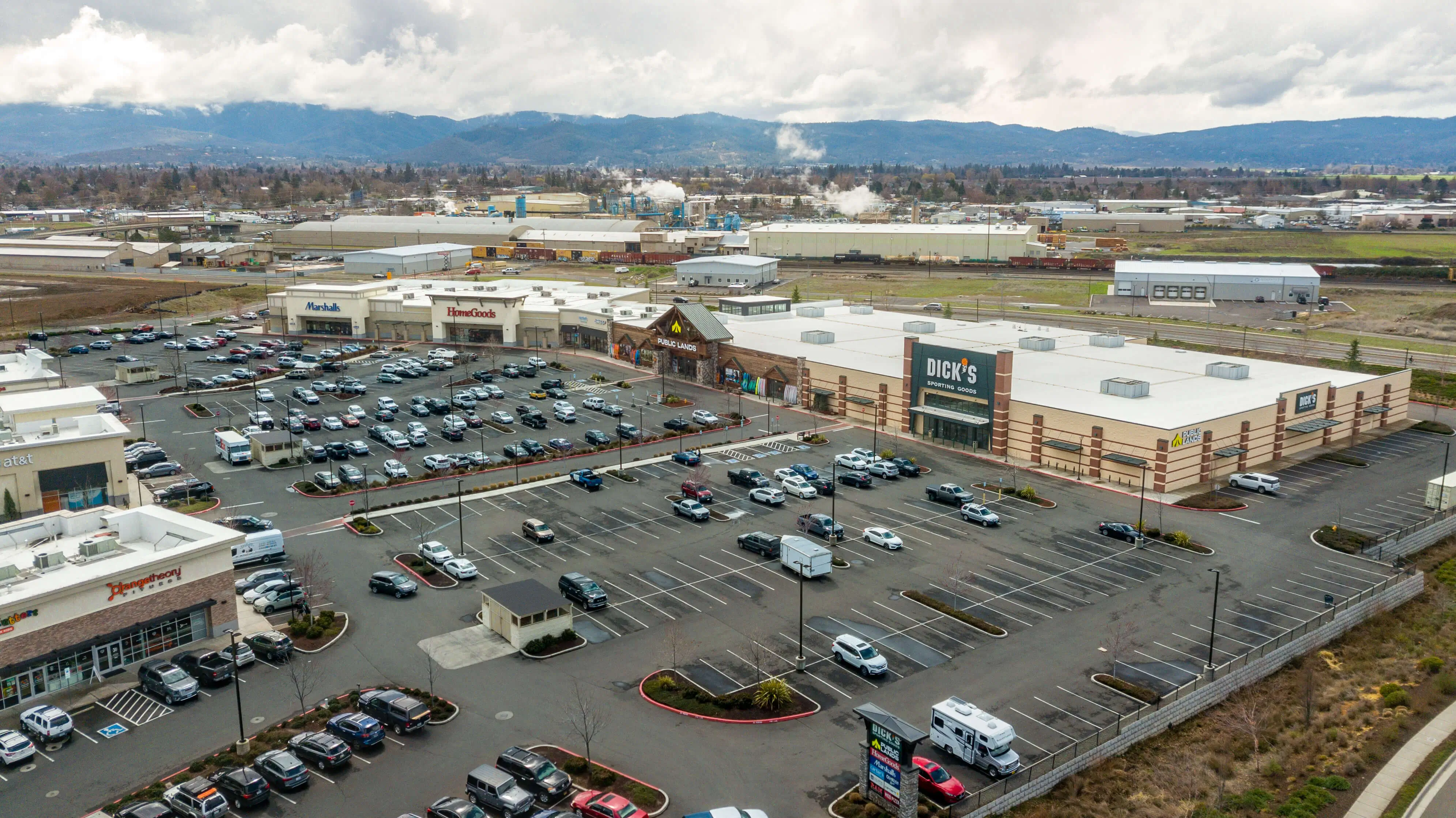
As a growing, relatively well-located market, Medford has seen nearly every kind of retailer both come and go. Nearly every time we list an empty retail building - or especially when we sold The Flying Lark - there is overwhelming public feedback of what "the people" want.
At the top of the list is the perfectly nostalgic roller rink, which hasn't been seen in town in over a decade. Closely following behind is Dave and Buster's or similar entertainment-focused users. Then of course there is the mix of Cheesecake Factory, Chili's, and other restaurants people dream about. But each one of these users has a common thread for why they aren't in town yet.
Today's national tenant - someone who has hundreds or thousands of locations across the US - finds, vets, and qualifies new markets across the country almost entirely differently than just a few years ago.
Modern data services have completely changed how much sales, traffic, and market data is available for companies to purchase and analyze. Platforms like Placer.ai ping every cell phone in a certain trade area to track the real-time headcount inside an individual storefront. Rapidly updating satellite images of parking lots in front of big box stores can track week-to-week occupancy levels of any building, and moving vehicle traffic count data has become much more accessible and widespread.
While Medford does have certain areas with excellent traffic, and the local population has historically supported retail well, today's national users have high thresholds to consider before entering a new market.
For example, The Cheesecake Factory's minimum median household income threshold for a new market is over $200k. Medford's number? $73k.It's easy to provide anecdotes for the intense local demand - such as the police needing to direct traffic when a local Sonic opened up - but the data and algorithms control major retailers’ C-suite-level decision-making, driven especially by local demographics and incomes.
But ultimately, it comes down to cost. For example, let's consider a roller rink: the combination of factors including the cost to lease a building large enough ($30-50k/month base), landlords’ mass adoption of NNN leases adding thousands a month on top of rent, skyrocketing labor costs, hiring issues, rapid supply chain cost growth, and a struggling consumer with declining discretionary income, and simply needing a profit margin, makes most unconventional or lower-market concepts functionally unprofitable.
And if the user wanted to buy or build a building to fit a rink, the construction and buildout costs would be staggering.
This is by no means meant to be a pessimistic take, but rather an honest look at the prerequisites users account for in today's world. And if even one or two of these fail to meet their risk tolerances, it'll disqualify the entire deal.
All this said, for the retailers that do jump into the local market, they've historically been well-rewarded - and at a rapidly growing clip, more retailers are seeing the green grass.
Disclaimer: This content is provided for informational purposes only and only reflects the personal opinions of the author. It is not intended as professional or investment advice, or a substitute for consulting qualified experts in tax or law. Always consult your CPA, attorney, and all other qualified professionals prior to making investment decisions. While we strive to present accurate and up-to-date data, we make no warranties or representations regarding its completeness, reliability, or suitability for your specific situation. Always seek the guidance of licensed professionals before making any decisions related to commercial real estate investments or transactions.